
Last Updated: November 15, 2026
Quick Summary
The best gentle exfoliant for mature skin is the SkinCeuticals Retexturing Activator, a leave-on formula that exfoliates without scrubbing. Dermatologists favor mild chemical exfoliants over gritty scrubs for mature skin, starting once or twice a week. Pair any exfoliant with hydration and daily sunscreen.
- Dermatologists favor chemical exfoliants over gritty scrubs because acids dissolve dead cells rather than abrading skin.
- Start with once or twice weekly use and patch test on the jawline before applying to the full face.
- Lactic acid is a larger molecule than glycolic acid, so it tends to act more slowly and gently.
- Alternate nights between exfoliants and retinoids rather than layering both, to reduce irritation risk.
- Daily broad-spectrum sunscreen is non-negotiable because exfoliated skin is more vulnerable to UV damage.
Table of Contents
- Quick Comparison: Best Gentle Exfoliants for Mature Skin
- How We Chose and What Dermatologists Look For
- Best Overall Gentle Exfoliant for Mature Skin
- Best Gentle Exfoliant for Mature Skin Over 50
- Best Gentle Exfoliant for Mature Skin Over 60
- The Best Over the Counter Exfoliator for Aging Skin
- The Best Exfoliator for Face Recommended by Dermatologists
- Acids, Enzymes, or a Physical Scrub: How to Choose
- Frequently Asked Questions
Quick Comparison: Best Gentle Exfoliants for Mature Skin
Finding the best gentle exfoliant for mature skin starts with one shift in thinking: at this stage, exfoliation should repair more than it removes. The American Academy of Dermatology notes that people with dry, sensitive, or easily irritated skin may do better with a mild chemical exfoliator and a washcloth than with a scrub (the American Academy of Dermatology).
Below, we compare formulas by how they treat the skin barrier, not just by how fast they promise results. For anyone whose skin reacts to acids, the Coule Dual Active Retinol Balm is one option to consider.
| Product | Format | Best For | Listed Price |
|---|---|---|---|
| SkinCeuticals Retexturing Activator | Leave-on exfoliant | Best overall for mature skin | $100 |
| Coule Dual Active Retinol Balm | Retinol balm | Barrier-first anti-aging | See site for current price |
| Tatcha The Rice Polish | Rice polish | Dry, mature skin | $69 |
| Sunday Riley Good Genes | Lactic acid treatment | Smoothing and hydration | Not listed |
| Dermalogica Daily Microfoliant | Daily microfoliant | Gentle daily use | Not listed |
| Kate Somerville ExfoliKate | Intensive treatment | Powerful but gentle | Not listed |
How We Chose and What Dermatologists Look For
We judged every product on four criteria: acid type and strength, barrier support, format, and how easily it fits a mature-skin routine. A gentle exfoliant for aging skin should loosen dead skin cells without stripping the lipids that keep skin comfortable.
Dermatologists generally favor chemical exfoliants over gritty scrubs for mature skin, because acids and enzymes dissolve the bonds holding dead cells in place rather than abrading the surface. The same AAD guidance cited above recommends starting slowly, testing on a small patch, and limiting frequency to once or twice a week at first.
We weighted formulas that pair exfoliation with hydration, since mature skin loses moisture more readily.
Best Overall Gentle Exfoliant for Mature Skin
SkinCeuticals Retexturing Activator: Best Overall
The SkinCeuticals Retexturing Activator earns the top spot because it exfoliates in a leave-on format that never requires scrubbing.
The trade-off is real: the manufacturer's ingredient and usage details are not fully laid out in the sources we reviewed, so read the label before committing.
Best for: mature skin that wants steady, hands-off exfoliation. Skip if: you prefer a rinse-off product or a lower entry price.
Coule Dual Active Retinol Balm: Best for Barrier-First Anti-Aging
The Coule Dual Active Retinol Balm is a dual active retinol formula in a sleek aluminum tube. It is designed for both men and women, and it draws on French pharmacy tradition paired with modern, science-backed formulation.
If you are weighing whether a retinol balm fits your routine, our guide to the signs a dual active retinol balm is worth it walks through what to expect before you buy.
Best for: sensitive, mature skin easing into actives. Skip if: you want an exfoliating acid specifically.
Best Gentle Exfoliant for Mature Skin Over 50
For skin past 50, the best gentle exfoliant for mature skin over 50 is one that smooths without triggering redness, and lactic acid formulas fit that brief well. Lactic acid is an alpha hydroxy acid and a larger molecule than glycolic acid, so it tends to act more slowly and gently at the surface, a slower pace that is often kinder to thinning, mature skin.
Match the acid to your concern. Lactic acid suits dryness and dullness; mandelic acid is a larger molecule and a good option for sensitive skin; glycolic acid is the most studied AHA but also the most likely to sting, so save it for skin that has already tolerated lactic or mandelic. Salicylic acid is the better choice if clogged pores or oiliness are part of the picture. For skin over 50 that is also using a retinoid, alternate nights rather than layering both, and keep a barrier moisturizer in the routine.
Use a simple frequency plan. Start twice weekly at night, and buffer with a moisturizer if you feel tightness. Hold that frequency for a month before adding a third night. Watch out: if your skin stings when you apply a moisturizer that usually feels neutral, pause the exfoliant for a week and restart at once weekly.
Check the label for concentration and price. Check the product label directly for concentration and current pricing before committing. Pair any AHA with daily broad-spectrum sunscreen, because exfoliated skin is more vulnerable to UV damage. If dark spots are your main concern, our guide on treating hyperpigmentation with retinoids explains how retinoids fit alongside exfoliation.
Best Gentle Exfoliant for Mature Skin Over 60
Skin over 60 usually needs exfoliation that restores comfort as much as it refines texture, and the best gentle exfoliant for mature skin over 60 leans on enzymes and fine polishes rather than strong acids.
A common mistake at this stage is exfoliating daily out of habit. Two or three times a week is enough for most people, and a patch test on the jawline first will tell you more than any label.
The Best Over the Counter Exfoliator for Aging Skin
The best over the counter exfoliator for aging skin balances proven ingredients with a price that makes regular use sustainable, and several strong options sit on drugstore and department-store shelves.
What most guides miss is that price does not predict tolerance. A budget milkfoliant can be gentler than a luxury peel, so match the formula to your skin rather than the price tag. For a deeper look at texture-focused options, our comparison of the best retinoid for mature skin texture is a useful next read.
The Best Exfoliator for Face Recommended by Dermatologists
Dermatologist-informed guidance consistently favors starting low and going slow: one application, then a few days of observation before the next. If dark spots are your main concern, our guide on treating hyperpigmentation with retinoids explains how retinoids fit alongside exfoliation.
Acids, Enzymes, or a Physical Scrub: How to Choose
Choosing between acids, enzymes, and physical scrubs comes down to your skin's tolerance, your goal, and how much time you can give a new product to prove itself.
Start with the mechanism. Chemical exfoliants dissolve the bonds that hold dead cells together. Alpha hydroxy acids (AHAs) like glycolic, lactic, and mandelic acid work at the surface and suit dullness and texture; lactic and mandelic are larger molecules than glycolic and tend to act more slowly, which is often kinder to thinning skin. Beta hydroxy acid (salicylic acid) is oil-soluble and works inside the pore, which helps oily and acne-prone skin. Polyhydroxy acids (PHAs) such as gluconolactone are the gentlest acid family and a reasonable starting point for sensitive skin. Enzymes, usually from fruit sources like papaya or pineapple, digest dead cells without acid and are a smart pick for reactive skin that stings easily. Physical exfoliants rely on friction; for mature skin, keep them fine-grained and infrequent, and avoid gritty scrubs on skin that reddens under pressure.
Use a decision guide rather than a product list. If your skin is dry and tight, lean toward lactic acid, PHAs, or an enzyme formula buffered with hydration. If your main concern is clogged pores or oiliness, salicylic acid is the better fit. If you are reactive or new to actives, start with an enzyme or PHA and add an AHA only after two to three weeks of tolerance. If you want the least risk of over-exfoliation, choose a rinse-off or short-contact format over a leave-on acid until you know how your skin responds.
Follow a week-by-week ramp-up plan. A common pattern is: week one, patch test on the jawline and use once; week two, use twice if there is no stinging, redness, or flaking; week three, add a third use only if skin feels comfortable; week four, hold at that frequency for a month before considering more. Most mature skin does well at two or three sessions a week, and daily use is rarely necessary. Watch out: if you feel tightness or stinging when you apply your usual moisturizer, you have likely moved too fast, drop back to the previous frequency for two weeks.
Sequence exfoliants around your other actives. Exfoliating acids and retinoids both speed cell turnover, so using them on the same night raises irritation risk. A practical approach is to alternate nights, exfoliant one night, retinoid the next, or to use the exfoliant in the morning and the retinoid at night if your skin tolerates it. Vitamin C and exfoliating acids can be layered, but if you are sensitive, separate them by routine (acid at night, vitamin C in the morning). Keep the rest of the routine simple: a gentle cleanser, a barrier-supporting moisturizer, and daily broad-spectrum sunscreen.
Protect the barrier and know when to pause. Exfoliated skin is more vulnerable to UV damage, so daily sunscreen is non-negotiable. If you see persistent redness, flaking, or stinging, stop all exfoliants for a week, switch to a plain moisturizer, and reintroduce one product at a time. Our tips on using actives without further irritation cover how to rebuild tolerance step by step, and our beginner's guide to gentle retinol for sensitive aging skin maps out a slow ramp-up if you are adding a retinoid alongside an exfoliant.
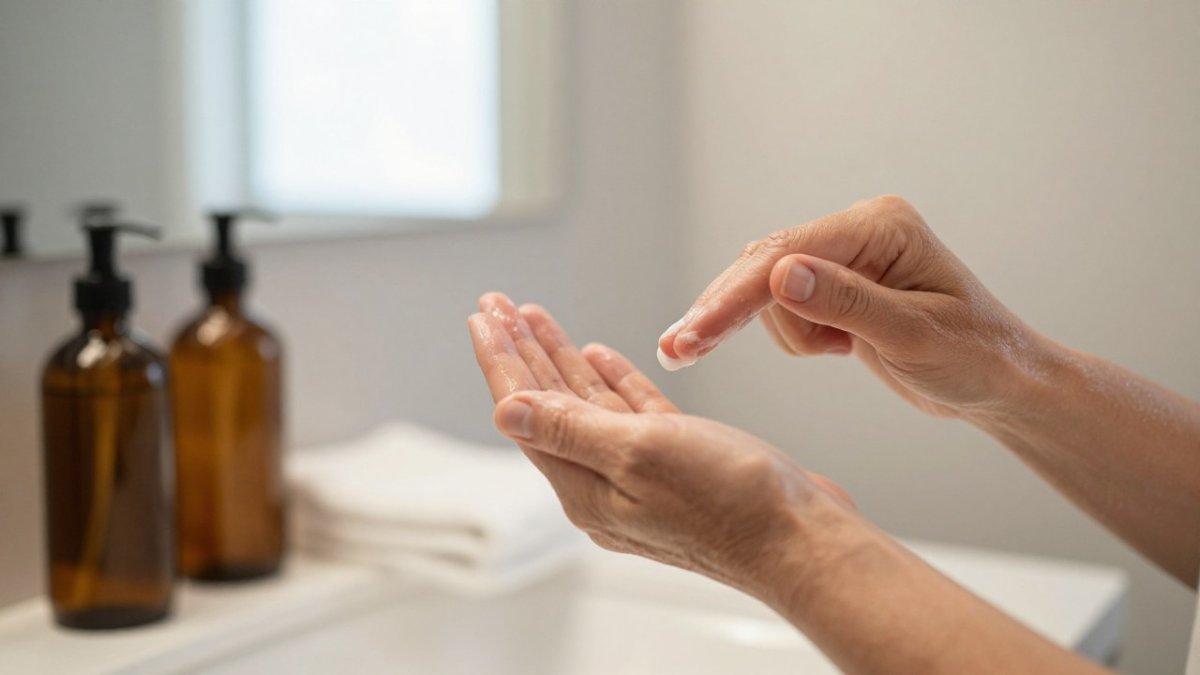
Mature skin does not need aggressive exfoliation to look smoother and brighter. It needs a formula that respects the barrier while it refines texture, and that is exactly where Coule focuses. Our Dual Active Retinol Balm pairs French pharmacy heritage with modern, science-backed formulation, comes in a sleek aluminum tube, and is made for both men and women easing into actives. Get started with Coule and build a gentler path to visible radiance.
Frequently Asked Questions
What is the best facial exfoliator for mature, sensitive skin?
A leave-on acid or a finely milled polish is usually gentler than a coarse scrub. Look for lactic acid, mandelic acid, or polyhydroxy acids, which tend to be larger molecules that sit on the surface rather than driving deep into pores. The American Academy of Dermatology notes that dry, sensitive, or acne-prone skin may do better with a washcloth and a mild chemical exfoliator than with mechanical scrubbing. Start once or twice a week and build up slowly.
How often should mature skin be exfoliated?
Most mature skin does well with two to three sessions a week, not daily. Begin with one application weekly for the first two weeks, then add a second night if there is no stinging, tightness, or redness. A daily formula is only appropriate if it is buffered and low-strength. If your skin feels tight after cleansing or stings when you apply moisturizer, cut back to once a week and rebuild from there.
Is a chemical or physical exfoliant better for mature skin?
Chemical exfoliants generally give more control because concentration and pH are measurable, and they do not rely on friction. Physical scrubs and polishes can work well for dry, thicker skin when the particles are fine and round, like rice bran or jojoba beads. Coarse grains, brushes, and vigorous rubbing are the usual culprits behind irritation. Whichever route you take, the deciding factor is how your skin barrier responds over two weeks, not the format itself.
Can I use a gentle exfoliant with retinol at the same time?
Yes, but sequence them carefully. Use the exfoliant on a different night from your retinol at first, or apply the exfoliant in the morning and retinol at night. Layering an acid directly under a retinoid increases the chance of redness and flaking, especially in the first month. Once your skin has acclimated, a low-strength leave-on exfoliant in the morning and a retinol balm at night is a workable routine for most people.
Do I need sunscreen after exfoliating?
Yes, and it is not optional. Exfoliation removes dead surface cells and leaves fresher skin more exposed, so daily broad-spectrum SPF 30 or higher is the step that protects the tone and texture improvements you just paid for. Apply it every morning regardless of weather, and reapply if you are outside for long stretches. Skipping sun protection is the fastest way to undo the benefit of any exfoliant.
