
Last Updated: November 4, 2026
Quick Summary
The best gentle retinol for sensitive aging skin is a low-concentration, cream-based formula applied sparingly two nights a week at most until skin builds tolerance. Start at 0.1% retinol or less, since cream formulas tend to be less drying than serums. Apply a pea-sized amount to dry skin and skip the eyes and nose corners.
- Retinol is roughly 20 times less potent than tretinoin, which suits reactive skin as a starting point.
- Add a third retinol night only after two full weeks with no redness, stinging, or flaking.
- Applying retinol to damp skin increases penetration and stings, so wait a few minutes after cleansing.
- Keep the rest of your routine boring for the first month: no glycolic acid, scrubs, or vitamin C.
- A patch test behind the ear for three nights tells you more than any review.
Table of Contents
- Best Retinol for Sensitive Skin Beginners: Start Low, Go Slow
- Encapsulated Retinol for Sensitive Skin: Why Delivery Matters
- How Often to Use Retinol on Sensitive Skin Without Irritation
- Retinol Alternatives for Sensitive Skin: When to Choose Bakuchiol
- Building Your Gentle Retinol Routine with Coule
- Frequently Asked Questions
Best Retinol for Sensitive Skin Beginners: Start Low, Go Slow
The best retinol for sensitive skin beginners is a low-concentration, cream-based formula applied sparingly, two nights a week at most, until skin builds tolerance. Start lower than you think you need, and let your skin set the pace. Retinol is roughly 20 times less potent than tretinoin, which is exactly why it suits reactive skin as a starting point (Mukherjee et al. retinoid clinical overview(https://pmc.ncbi.nlm.nih.gov/articles/PMC2699641/)).
Retinol concentration is the number to check first: sensitive skin should start at 0.1% retinol or less, per Everyday Health's retinol guidance. Cream beats serum here, Chad Hartmann, MD, notes cream-based formulas "tend to be more gentle because they're less drying."
If you're ready to begin, our French pharmacy dual active retinoid night cream for sensitive skin is a retinoid option for sensitive skin. Readers weighing retinoids for mature skin texture can also read our deeper comparison of the best retinoid for mature skin texture.
Best for: first-time retinol users with reactive skin. Skip if: you have active eczema flares or broken skin.
Encapsulated Retinol for Sensitive Skin: Why Delivery Matters
Encapsulated retinol is retinol held inside a protective carrier that releases it gradually onto skin, which typically means less of a sudden dose and fewer irritation spikes. Retinol causes considerably less transepidermal water loss, redness, and flaking than retinoic acid, and slow release pushes that gap wider (retinoid safety review(https://pmc.ncbi.nlm.nih.gov/articles/PMC2699641/)).
Our dual active retinol renewal night cream is a dual active retinoid product sold in a 50g aluminum tube.
How Often to Use Retinol on Sensitive Skin Without Irritation
Start with two nights per week, then add a third night only after two full weeks with no redness, stinging, or flaking. Apply to dry skin, use a pea-sized amount for the whole face, and skip the eyes and corners of the nose. On off nights, a moisturizer such as our postbiotic restorative moisturizer for dry, irritated skin can help keep skin hydrated between retinoid nights. Once your skin is settled, our guide on treating hyperpigmentation with retinoids covers the next step.
| Sign | Expected adjustment | Damaging reaction |
|---|---|---|
| Mild tightness | Days 1-14, fades | Worsens nightly |
| Light flaking | Settles with moisturizer | Cracking or oozing |
| Faint warmth | Brief after application | Swelling or hives |
Watch out: applying retinol to damp skin increases penetration and stings, so wait a few minutes after cleansing.
Retinol Alternatives for Sensitive Skin: When to Choose Bakuchiol
Bakuchiol is a plant-based ingredient that is sometimes discussed as an alternative to retinol for skin that is sensitive to retinoids. Retinol alternatives also include other ingredient families that some readers consider when retinoids are not suitable.
Building Your Gentle Retinol Routine with Coule
A workable sensitive-skin routine is short: cleanse, wait, apply a pea-sized amount of gentle retinol, then moisturize. Nothing else.
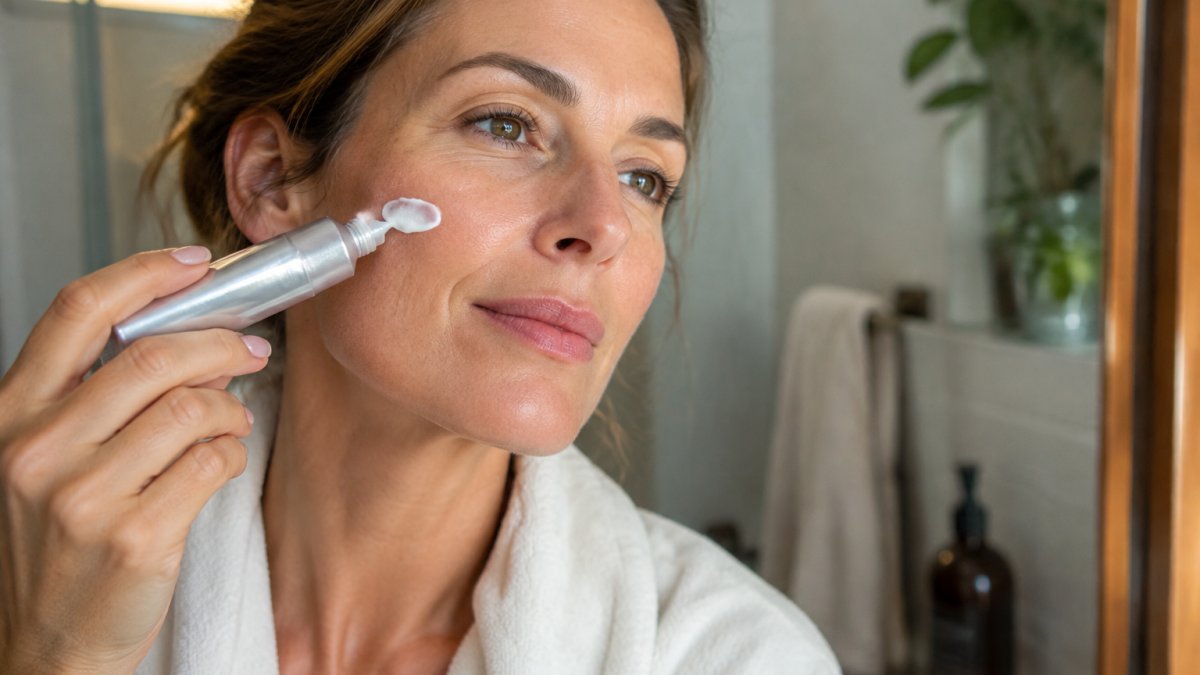
The woman is American.
Keep the rest of your routine boring for the first month. No glycolic acid, no scrubs, no vitamin C in the same sitting. Add sunscreen every morning, because retinoids make skin more sun-sensitive. A patch test behind the ear for three nights tells you more than any review.
That's the honest version of gentle retinol: lower strength, slower schedule, better delivery. Coule's dual active retinol balm is designed for those seeking a gentler retinol option, so you can start with a lower-intensity routine. Explore the Coule retinoid collection and give your skin time before you judge the results.
Frequently Asked Questions
How should beginners use retinol on sensitive skin?
Start with a low-strength retinol and apply it two nights a week. Apply a pea-sized amount to dry skin, follow with a moisturizer, and add one more night per week only after two to three weeks without redness or flaking. Patch test on your jawline first.
How often should you use retinol if you have sensitive skin?
Two nights a week is a reasonable starting point for sensitive skin. Once your skin tolerates that without stinging, flaking, or persistent redness, move to every other night. Many people with sensitive skin never need to go beyond three or four nights a week to see improvement in fine lines and skin texture. Consistency matters more than frequency.
What can you use instead of retinol if your skin is sensitive?
Bakuchiol is a plant-based option that some people consider for reactive skin. Polyhydroxy acids and gentle glycolic acid formulas can support cell turnover with less sting. If you have rosacea or a compromised skin barrier, ask a dermatologist before starting any active.
