
Last Updated: November 2, 2026
Quick Summary
For mature skin texture, retinal (retinaldehyde) is the best over-the-counter choice because it sits one conversion step closer to retinoic acid than retinol, so it smooths faster while remaining tolerable. Start with retinol twice weekly if you have never used a retinoid, and move to retinal only after three months without irritation.
- Retinol needs two conversion steps to reach retinoic acid; retinal needs only one.
- Start retinol at two nights weekly and build to three or four nights within a month or two.
- Expect the first texture changes around weeks six to eight, with more smoothing by week twelve.
- Pause three to four nights if stinging or flaking appears, then resume at a lower frequency.
- Photograph your face in the same light and angle every four weeks to track progress.
Table of Contents
- Why Mature Skin Texture Changes and What Retinoids Do About It
- Retinol vs Retinal vs Tretinoin: Choosing the Best Retinal Not Retinol for Texture
- How Often Should You Use Retinol on Mature Skin
- The Best Retinol Cream for Beginners With Mature Skin
- The Best Retinol for Sensitive Skin Beginners Who React Easily
- A Realistic Timeline and the Signs Your Texture Is Improving
- Choosing a Retinoid for Mature Skin Texture That Fits Your Routine
- Frequently Asked Questions
Why Mature Skin Texture Changes and What Retinoids Do About It
Texture changes on mature skin are not a mystery: cell turnover slows, collagen production declines, and years of sun exposure show up as roughness, fine lines, and uneven tone. The best retinoid for mature skin texture addresses those changes at the source rather than masking them.
Retinoids do not "resurface" skin in the way an exfoliant does. They work by influencing how skin cells behave, which is why results take weeks, not days.
How Retinoids Affect Cell Turnover and Collagen
Cell turnover is the process by which new skin cells rise to the surface and replace older ones. Retinoids speed this cycle up, so dull, rough surface cells shed more predictably. They also support collagen, the structural protein that keeps skin firm.
A clinical overview in Clinical Interventions in Aging describes tretinoin as possibly the most potent and most widely investigated retinoid for photoaging. That research base is why retinoids remain the reference point for texture concerns.
What Texture Problems Retinoids Can and Cannot Fix
Retinoids handle roughness, fine lines, and mild unevenness well. They are less reliable for deep laxity or volume loss, which sit below the surface. For tone-related concerns, our guide on how to treat hyperpigmentation with retinoids explains where they help and where they do not. If tone rather than texture is your main worry, what skincare actually evens out skin tone is the better starting point.
Retinol vs Retinal vs Tretinoin: Choosing the Best Retinal Not Retinol for Texture
For mature skin texture, retinal (retinaldehyde) sits one conversion step closer to retinoic acid, the form skin actually uses, than retinol does.
The three forms differ mainly in how many conversion steps they sit from retinoic acid, how much evidence supports them, and how well mature skin tolerates them:
| Form | Conversion steps to retinoic acid | Evidence base | Typical tolerability | Best for |
|---|---|---|---|---|
| Retinol | Two (retinol to retinal, retinal to retinoic acid) | Extensive cosmetic research | Most tolerable; gradual results | First-time users, sensitive skin, maintenance |
| Retinal | One (retinal to retinoic acid) | Growing cosmetic research | Moderate; faster adjustment than retinol | Mature texture, users who plateaued on retinol |
| Tretinoin | Zero (already active) | The reference standard in photoaging research | Least tolerable; prescription supervision | Stubborn texture under medical care |
Consumer Reports' review of anti-aging skincare notes that tretinoin is among the most potent and best-studied retinoids and is available by prescription. That is exactly why it is not the right first step for most people.
Why Conversion Steps Matter for Texture
Each conversion step costs potency and time. Retinol must be converted twice before skin can use it, so a meaningful share of what you apply never reaches the active form. Retinal needs only one conversion. Tretinoin skips conversion entirely.
The practical trade-off is not "stronger is better." It is "stronger is faster but less forgiving." Mature skin with a thinner barrier often does better on a form it can use four nights a week than on a form it can only tolerate once a week.
Evidence, Not Hype
A clinical overview in Clinical Interventions in Aging describes tretinoin as possibly the most potent and most widely investigated retinoid for photoaging. Retinal has a smaller but growing body of cosmetic research, and retinol has the longest track record among over-the-counter options. Do not treat these forms as interchangeable: the same percentage of retinol and retinal does not mean the same strength, and a 0.1% retinal product is not comparable to a 0.1% retinol product.
How to Choose Between Retinal and Retinol
The best retinal not retinol choice depends on how your skin has handled actives before:
- Never used a retinoid, or reacted to one? Start with a low-strength, encapsulated retinol cream twice weekly.
- Used retinol for three months without irritation but want more smoothing? Move to retinal at a modest concentration, still two to three nights weekly at first.
- Texture persists after a year of consistent over-the-counter use? That is the point to ask a dermatologist about tretinoin rather than escalating concentrations on your own.
Watch out: switching from retinol to retinal at the same frequency is the most common cause of a second adjustment period people did not plan for. Treat the switch like a restart, not a step up.
How Often Should You Use Retinol on Mature Skin
Start with retinol two nights per week and build from there. Most mature skin tolerates three to four nights weekly within a month or two, but the pace should follow your skin's response, not a calendar.
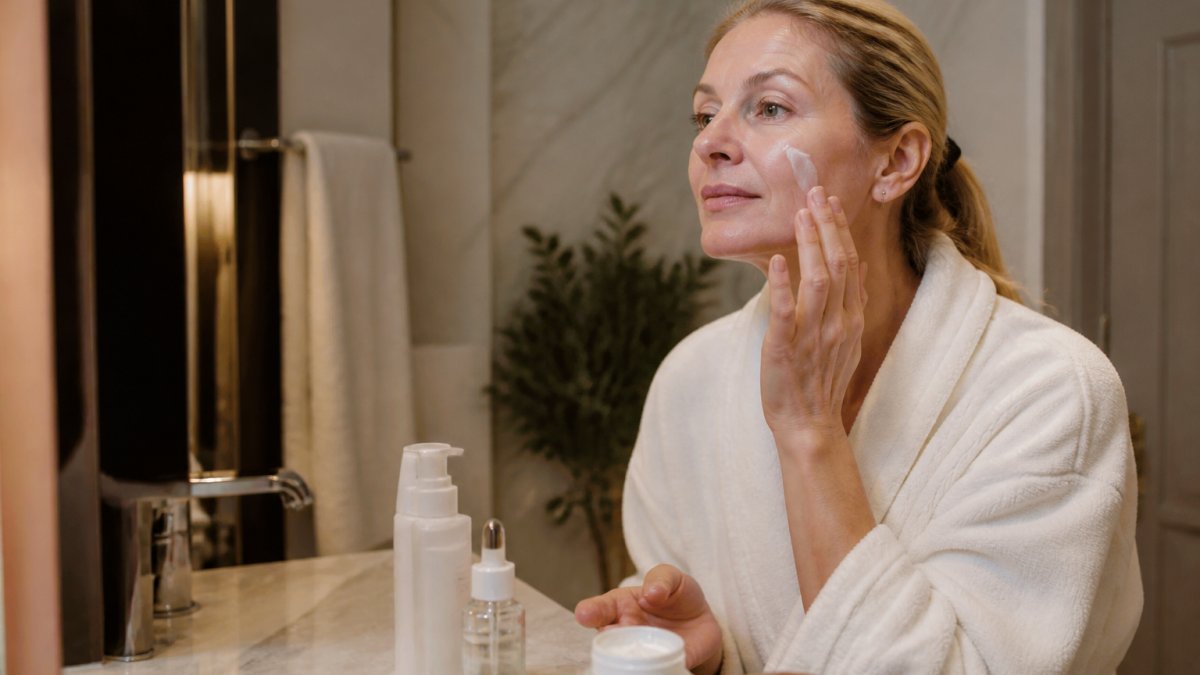
Mature skin has a thinner barrier and less oil, so it reacts faster than younger skin to the same concentration. A common mistake is jumping to nightly use because a product feels fine on night one. Irritation often appears on day three or four.
Building a Ramp-Up Schedule That Limits Irritation
Use this schedule as a starting frame and adjust to your skin:
- Weeks 1-2: Two nights weekly, thin layer, moisturizer on top
- Weeks 3-4: Three nights weekly if there is no redness or peeling
- Weeks 5-8: Four nights weekly, still buffered with moisturizer
- Ongoing: Hold at the highest frequency your skin tolerates comfortably
Apply at night only, and wear sunscreen daily. Retinoids make skin more sun-sensitive, and sun protection is what preserves the gains.
The Best Retinol Cream for Beginners With Mature Skin
The best retinol cream for beginners with mature skin is one with a modest concentration, a supportive base, and packaging that protects the formula from light and air. Beginners do not need the strongest product on the shelf. They need one they can use consistently for eight weeks without quitting.
Look for these markers on the label:
- Encapsulated retinol, which releases more slowly and tends to irritate less
- A cream or balm texture rather than a thin serum, since mature skin needs barrier support
- No stacking with strong acids in the same routine
Our dual active retinol balm is a cream format in an aluminum tube, designed for both men and women.
The Best Retinol for Sensitive Skin Beginners Who React Easily
The best retinol for sensitive skin beginners is a low-concentration, encapsulated formula introduced slowly, with barrier support built into the routine. Sensitivity is not a reason to skip retinoids. It is a reason to choose the format and pace more carefully.
GoodRx's guidance on retinol creams notes that many people experience dryness and irritation from retinol. That is a practical limitation, not a failure, and it is manageable.
Barrier Support and Irritation Prevention for Mature Skin
Mature skin loses moisture and barrier lipids over time, so irritation prevention matters more than it does at 25. Build these habits in from night one:
- Apply retinoid to dry skin, then moisturizer over it
- Skip other actives, including exfoliating acids, on retinoid nights
- Pause for three to four nights if stinging or flaking appears, then resume at a lower frequency
Watch out: layering a retinoid with a strong acid serum is the most common cause of a barrier flare that sets people back weeks.
A Realistic Timeline and the Signs Your Texture Is Improving
Expect the first texture changes around weeks six to eight, with more visible smoothing by week twelve. Retinoids are a slow build, and anyone promising overnight smoothing is selling something else.
The harder question is not "when" but "is this working or is this irritation?" Most guides skip that distinction, and it is the one that decides whether you keep going or back off.
What the First Twelve Weeks Usually Look Like
A common pattern among mature skin users:
- Weeks 1-2: Little visible change. Some tightness or faint flaking is normal as skin adjusts.
- Weeks 3-4: Possible mild purge or roughness on the chin and nose. This is adjustment, not improvement.
- Weeks 6-8: Skin feels smoother to the touch before it looks different. Makeup begins to sit more evenly.
- Weeks 10-12: Fine lines around the eyes look softer in daylight, and pores on the nose and inner cheeks appear less pronounced.
- Month 4 and beyond: Collagen-related firmness changes are gradual and measured in months, not weeks.
Irritation Versus Improvement: How to Tell Them Apart
Both can look like flaking and both can feel tight, so use these signals:
- Improvement: roughness fades, skin feels smoother under the fingers, makeup applies more evenly, and discomfort decreases week over week.
- Irritation: stinging when you apply moisturizer, redness that persists into the next morning, flaking that worsens rather than fades, or a burning sensation that outlasts application by more than a few minutes.
If you see the irritation pattern, pause for three to four nights, then resume at a lower frequency. Pushing through persistent stinging is the most common way people lose weeks of progress to a barrier flare.
Signs Your Texture Is Improving, in the Order Most People Notice Them
- Skin feels smoother to the touch before it looks different
- Makeup sits more evenly across the cheeks and forehead
- Fine lines around the eyes look softer in daylight
- Pores on the nose and inner cheeks appear less pronounced
A case study in the Journal of Drugs in Dermatology examined a combination of retinol, niacinamide, and Terminalia chebula for facial aging, though it reported no measurable outcome or sample size, so treat combination formulas as promising rather than proven.
How to Track Progress Without Guessing
Photograph your face in the same light, at the same angle, at the same time of day, once every four weeks. Texture changes are slow enough that memory is unreliable, and side-by-side photos are the only honest way to know whether the routine is working. Judge at the twelve-week mark, not the two-week mark.
Choosing a Retinoid for Mature Skin Texture That Fits Your Routine
The right retinoid for mature skin texture is the one you will actually use three or four nights a week for three months. Potency matters less than consistency and tolerance.
Use this decision guide:
- Never used a retinoid? Start with a low-strength retinol cream, twice weekly.
- Used retinol before without trouble? Move to retinal for more visible smoothing.
- Persistent texture under a dermatologist's care? Ask about tretinoin.
- Reactive, sensitive skin? Choose encapsulated retinol and buffer with moisturizer.
Wirecutter's retinol testing reports testing 35 over-the-counter retinol products and selecting six standouts, which shows how much formulation quality varies within the same category. Concentration on the label tells you less than how the formula is built.
Frequently Asked Questions
Can retinol fix textured skin?
Retinol can improve rough, uneven texture by speeding cell turnover and supporting collagen, but it works gradually rather than overnight. Most people see smoother texture after 12 to 24 weeks of consistent use. It helps most with roughness, fine lines, and uneven tone, and less with deep scarring or sagging. Pairing it with daily sunscreen and a barrier-supporting moisturizer protects the progress you make and reduces the dryness and peeling that can make texture look worse in the short term.
Is retinal better than retinol for mature skin?
Retinal sits one conversion step closer to retinoic acid than retinol. For mature skin texture, retinal is a reasonable step up if plain retinol has been well tolerated but progress has plateaued. It is not automatically better for everyone: sensitive or reactive skin may do better starting with a lower-strength retinol. Prescription tretinoin remains the most potent and most studied retinoid, but it requires a dermatologist and often brings more irritation.
How often should you use retinol on mature skin?
Start with two or three nights per week and increase only after two to four weeks without redness, stinging, or flaking. Mature skin has a thinner barrier and less natural oil, so it often needs a slower ramp-up than younger skin. Once tolerated, most people can move to every other night, and some reach nightly use. If irritation appears, drop back a night or two rather than stopping entirely. Apply at night and follow with moisturizer, and use sunscreen every morning.
How long does retinol take to improve skin texture?
Expect early changes in brightness and smoothness around four to eight weeks, with clearer texture and fine-line improvement typically appearing between 12 and 24 weeks. Collagen-related firmness takes longer, often six months or more of consistent use. Retinoid results build with continued application, so missed weeks slow progress. Photograph your skin in the same light each month to track real change, since gradual improvements are easy to overlook in the mirror.
Texture changes at 40 and beyond are manageable, but only with a retinoid your skin will tolerate long enough to work. Coule formulates with that reality in mind: French pharmacy roots, modern science, and a dual active retinol balm in a protective aluminum tube designed for mature skin and sensitive starters alike. Explore the Coule collection and build a retinoid routine you can keep.
