
Last Updated: November 1, 2026
Quick Summary
To treat hyperpigmentation with retinoids, start with a pea-sized amount every other night and build up to nightly use as your skin adjusts. Retinoids speed up cell turnover to shed pigment-laden cells, and daily broad-spectrum sunscreen is essential to prevent new dark spots.
- Cleveland Clinic advises every other day for the first couple of weeks.
- A pea-sized amount is enough to cover the entire face.
- Mild dryness and light flaking in the first two to four weeks are normal.
- Pull back to every third night if persistent redness or visible peeling occurs.
- The AAD recommends broad-spectrum SPF 30 or higher for daily use.
Table of Contents
- How Retinoids Fade Dark Spots Through Cell Turnover
- A Step-by-Step Retinoid Routine for Uneven Skin Tone
- How Often to Use Retinol When Fading Dark Spots
- Retinol Side Effects and Telling Adjustment From Irritation
- Retinol and Sunscreen: Why UV Protection Decides the Result
- Ingredients Not to Mix With Retinol
- Frequently Asked Questions
How Retinoids Fade Dark Spots Through Cell Turnover
Retinoids are vitamin A derivatives that speed up cell turnover, the process where old skin cells shed and new ones rise to the surface. Faster turnover pushes pigment-laden cells off the skin and brings fresher, more even-toned cells forward.
This is why dermatologists reach for them when treating stubborn dark spots. A 2021 review of topical retinoids in skin of color found that retinoids can improve post-inflammatory hyperpigmentation, partly through anti-inflammatory effects. Less inflammation means less pigment triggered in the first place.
The mechanism matters because retinoids affect how skin cells turn over.
Retinol vs Prescription Retinoids for Pigmentation
Retinol is the over-the-counter version. Prescription retinoids, like tretinoin, are stronger and act faster, but they demand more from your skin.
Here is how they compare:
| Feature | Retinol (OTC) | Prescription Retinoid |
|---|---|---|
| Strength | Gentler, converts in skin | Direct and potent |
| Irritation risk | Lower | Higher |
| Results timeline | Slower, weeks to months | Faster, but harsher start |
| Best for | Sensitive skin, beginners | Stubborn pigment, under care |
If your skin reacts badly to strong actives, start with retinol. A dual-active retinol balm from Coule is one option for this kind of gradual, controlled use.
Matching the Treatment to the Pigmentation Type
Not all dark spots behave the same way. Sun-induced spots sit on the surface. Post-inflammatory hyperpigmentation, or PIH, follows acne, injury, or irritation. Melasma is deeper and hormone-driven.
Retinoids are generally used for surface spots and PIH, while deep melasma often benefits from a dermatologist's plan. For a broader look at which ingredients actually even out tone, see what skincare actually evens out skin tone.
A Step-by-Step Retinoid Routine for Uneven Skin Tone
A gradual start is a sensible way to use retinoids without wrecking your skin barrier. Jumping straight to nightly use is a common mistake.
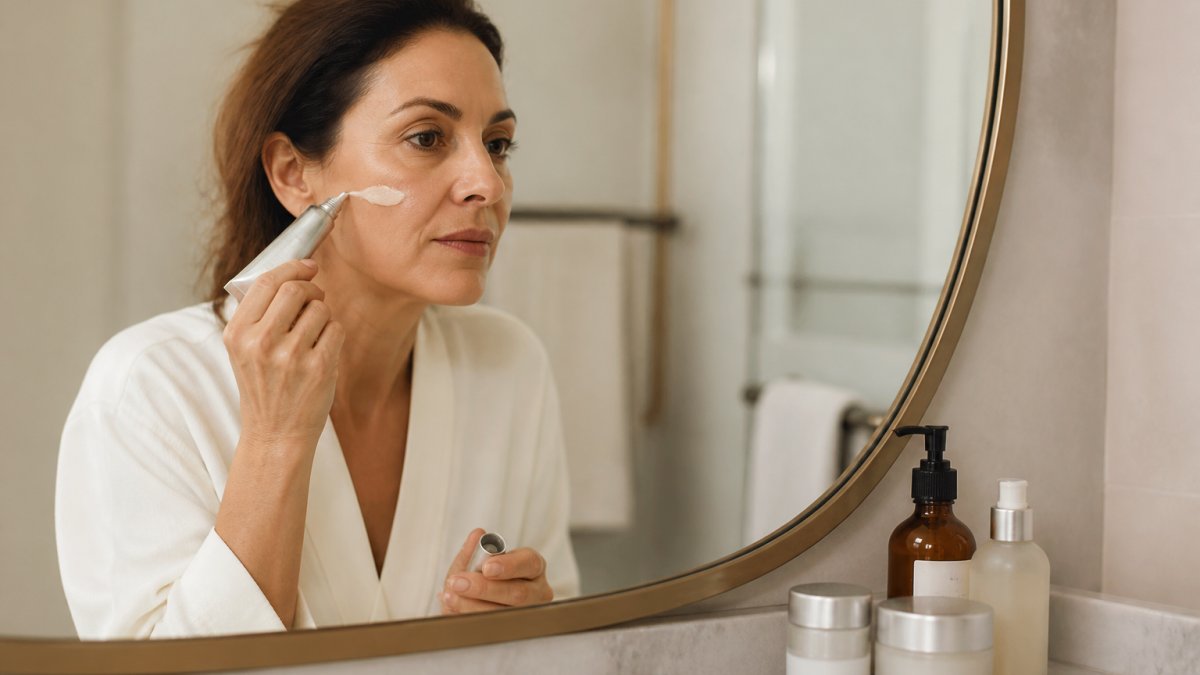
Follow this schedule:
- Cleanse and dry. Use a gentle cleanser, then wait until skin is fully dry.
- Apply a pea-sized amount. Cover the whole face, avoiding eyes and lips.
- Start every other day. Cleveland Clinic advises every other day for the first couple of weeks.
- Moisturize after. A barrier-supporting moisturizer reduces dryness and peeling.
- Build up slowly. Move to nightly use only when skin settles.
- Sunscreen every morning. Non-negotiable, every single day.
Strength, Formulation, and the Pea-Sized Amount
More product does not mean faster results. A pea-sized amount is enough for the entire face. A 2026 study in Cosmetics on a 4% retinol peel with antioxidants examined how retinol pairs with other actives, which is where modern formulations are heading.
Coule's dual active retinol balm comes in a sleek aluminum tube and is formulated for men and women.
How Often to Use Retinol When Fading Dark Spots
Start with every other night, then increase to nightly once your skin adjusts. Rushing this step is the fastest route to irritation-related darkening, which sets you back rather than forward.
Using retinol nightly from day one can cause redness and peeling, which may trigger new PIH. Patience is part of the process.
Retinol Side Effects and Telling Adjustment From Irritation
Mild dryness, light flaking, and a faint tightness in the first two to four weeks are normal. That is the adjustment period, and it usually settles as your skin builds tolerance. What is not normal, and what too many people miss, is irritation that creates new dark patches. On skin prone to post-inflammatory hyperpigmentation (PIH), redness and peeling are not just uncomfortable; they are a pigment trigger. Inflammation signals melanocytes to produce more melanin, so a harsh retinol start can leave you with more discoloration than you began with.
Use this general guide to decide what to do:
- Normal adjustment: light flaking around the nose and mouth, mild dryness, slight stinging that fades within minutes of moisturizer. Keep going at the same frequency.
- Early irritation: persistent redness, burning that lasts, visible peeling beyond light flaking. Pull back to every third night, apply moisturizer before and after the retinoid (the "retinoid sandwich"), and hold at that frequency until symptoms clear.
- Stop-and-seek-care signs: swelling, deep redness, new or worsening dark patches, or a rash that spreads beyond the application area. Pause the retinoid and see a dermatologist before restarting.
If you have a deeper skin tone or a history of PIH, treat any new darkening after starting a retinoid as a signal to reduce frequency immediately, not as evidence the product is "working." Post-inflammatory darkening can take months to fade and is easier to prevent than to reverse.
A common pattern is that people mistake irritation for progress and increase frequency, which deepens the pigment. A cautious approach is to hold your current frequency if your skin is red or stinging.
Why Pigmentation Can Look Worse Before It Looks Better
Two different things get confused here. First, retinoids speed up cell turnover, so existing pigment can surface and look temporarily more visible before it sheds, this is short-lived and fades as turnover continues. Second, genuine irritation-driven PIH is new pigment caused by inflammation, and it does not resolve on its own while you keep irritating the skin. The first is a reason to stay the course; the second is a reason to back off. If dark spots are spreading or deepening rather than fading after four to six weeks, that points to the second scenario.
When to Consult a Dermatologist
See a dermatologist if discoloration is changing shape or color, has an irregular border, or appears in a spot you have not treated, those features warrant evaluation rather than a cosmetic routine. If you are pregnant, breastfeeding, or planning pregnancy, speak with a healthcare provider before using retinoids.
Retinol and Sunscreen: Why UV Protection Decides the Result
Daily sunscreen supports fading and helps limit new pigmentation from UV exposure.
Apply a broad-spectrum sunscreen every morning, reapply through the day, and wear a hat outdoors. Without this step, retinoids can actually make uneven tone worse. The American Academy of Dermatology sunscreen guidance recommends broad-spectrum SPF 30 or higher for daily use.
Ingredients Not to Mix With Retinol
Some actives fight each other. Mixing the wrong ones causes peeling and barrier damage that undoes your progress.
Avoid combining retinol in the same routine with:
- Strong exfoliating acids like glycolic or lactic acid
- Benzoyl peroxide, which can deactivate retinol
- Other retinoids, which doubles irritation
- High-strength vitamin C in the same layer
Alternate nights instead of layering them.
Frequently Asked Questions
Does retinol help clear hyperpigmentation?
Yes. Research on topical retinoids has examined their effect on post-inflammatory hyperpigmentation. Retinoids can speed cell turnover. Results take time, and daily sunscreen helps limit new pigment from UV exposure.
How often should you use retinol for hyperpigmentation?
Starting every other night for the first couple of weeks is a common approach rather than beginning with daily use. If your skin tolerates that without stinging or flaking, move to once daily at night. More frequent use may increase the likelihood of side effects like dryness and peeling. Consistency over months matters more than intensity.
Can retinol make dark spots look worse at first?
It can, and the cause is usually irritation. Irritated skin can sometimes be followed by post-inflammatory hyperpigmentation, so a spot may look darker before it fades. Tell the difference by watching for redness, stinging, and peeling alongside the darkening. If those appear, consider cutting back to less frequent use and adding a moisturizer. Normal adjustment brings mild flaking without new or darkening patches.
Should you use sunscreen when treating hyperpigmentation with retinoids?
Yes, every morning. Retinoids can make skin more sensitive to sun exposure, and UV light can trigger new pigment. Apply a broad-spectrum sunscreen of SPF 30 or higher daily, reapply during long outdoor time, and wear a hat. Consistent UV protection supports the results you are working toward.
Dark spots take weeks to fade, and the routine only works if you can stick with it. Coule makes that easier with a dual active retinol balm in a sleek aluminum tube, built for gradual, gentle use on all skin types. Our French pharmacy roots and science-backed formulas give you a controlled start without the harsh adjustment. Get started with Coule and build a nighttime routine your skin can actually tolerate.
