
Last Updated: November 22, 2026
Quick Summary
Science based skincare for deep wrinkles starts with daily broad-spectrum sunscreen, since photoaging is the main driver of wrinkle formation, then adds proven actives like retinoids, antioxidants, and peptides. Retinol converts to retinoic acid over time, so expect several months of consistent use before seeing results.
- Daily broad-spectrum sunscreen is the single most effective anti-aging step.
- Retinoids, antioxidants, and peptides have the strongest research behind them.
- Start retinoids at a low frequency and build up only if skin stays calm.
- Skip retinoids entirely during pregnancy or breastfeeding and ask a clinician about alternatives.
- Do not stack a retinoid with a strong acid or benzoyl peroxide; alternate nights instead.
Table of Contents
- Why Science Based Skincare for Deep Wrinkles Starts With the Evidence
- Retinol for Deep Wrinkles: Strength, Formulation, and Realistic Results
- Choosing the Best Cream for Deep Wrinkles Without Overpaying
- Frequently Asked Questions
Why Science Based Skincare for Deep Wrinkles Starts With the Evidence
Science based skincare for deep wrinkles begins with one uncomfortable fact: most visible aging comes from the sun, not from a missing miracle ingredient. Research published in Skin anti-aging strategies, a peer-reviewed review describes photoaging as the main driver of wrinkle formation, and outlines reducing inflammation with topical or systemic antioxidants as one prevention approach used alongside other strategies.
At Coule, we build our formulas around that evidence. Three rules matter most:
- Prevention beats repair. Daily broad-spectrum sunscreen is the single most effective anti-aging step.
- Actives need proof. Retinoids, antioxidants, and peptides have the strongest research behind them.
- Claims are not proof. The FDA draws a line between cosmetics and drug-like claims, so treat "clinically proven" language with caution.
Retinol for Deep Wrinkles: Strength, Formulation, and Realistic Results
Retinol for deep wrinkles works gradually. Skin enzymes convert retinol to retinoic acid over time, and results typically take several months of consistent use.
What retinoids can and cannot do depends on wrinkle depth:
Formulation and tolerability decide whether you can stick with a retinoid long enough to see results. For a deeper guide on which retinoid suits mature skin, compare the options before choosing.
Start with a low frequency and build up gradually only if skin stays calm. See how to introduce actives without irritation.
For deep, static wrinkles, consider consulting a clinician about your options.
Choosing the Best Cream for Deep Wrinkles Without Overpaying
The best cream for deep wrinkles is the one you will use daily, with proven actives and a formula your skin tolerates. Price is a poor proxy for results: a Read the ingredient list the way a formulator does.
| What to check | Why it matters | Red flag |
|---|---|---|
| Named active + strength | Determines real effect | "Proprietary complex" |
| Barrier ingredients | Reduces irritation | Fragrance high on list |
| Sun protection guidance | Prevents photoaging | No SPF advice |
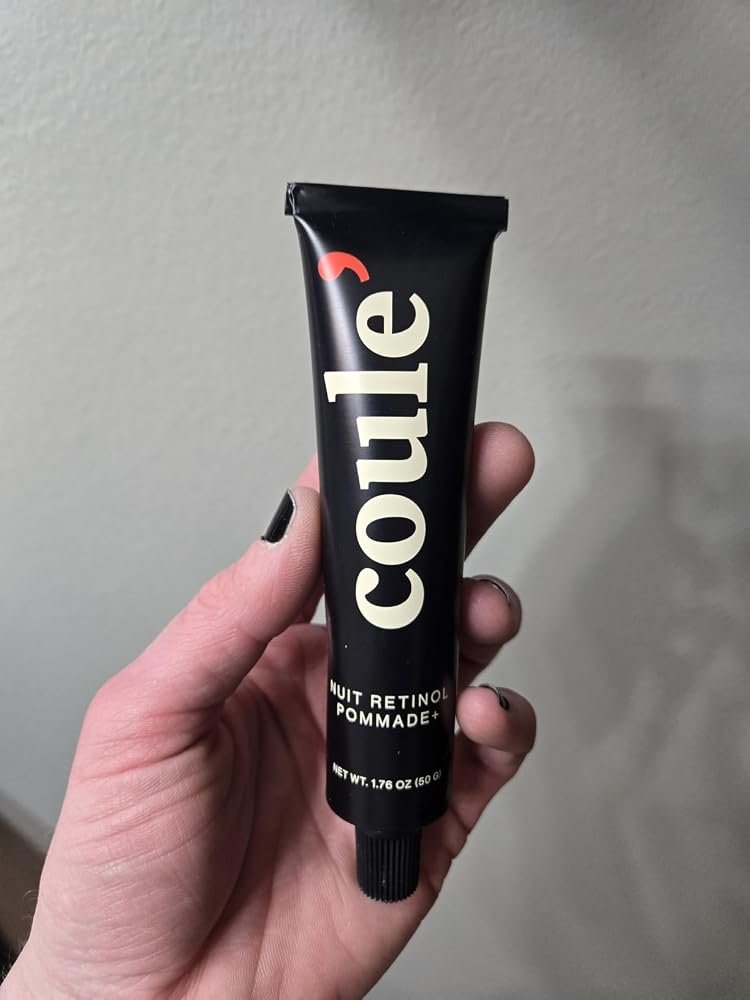
| Tube or pump packaging | Protects retinoids from light | Wide-mouth jar |
Match the formula to your skin type and sensitivity:
- Oily or acne-prone skin: a gel-cream or lotion with a retinoid and niacinamide is less likely to clog pores than a heavy balm.
- Dry or barrier-compromised skin: petrolatum, ceramides, glycerin, and squalane reduce the irritation that drives people to quit retinoids.
- Sensitive or rosacea-prone skin: start with a lower-strength encapsulated retinoid or bakuchiol, patch-test on the jawline, and avoid fragrance and essential oils.
- Pregnancy or breastfeeding: skip retinoids entirely and ask a clinician about alternatives; this is a hard contraindication.
Sequence: cleanser, hydrating layer, retinoid at night (or antioxidant serum in the morning), moisturizer, then broad-spectrum sunscreen in the morning. Do not stack a retinoid with a strong acid or benzoyl peroxide; alternate nights instead.
Our Nuit Retinol Pommade+ is a dual retinoid balm in an aluminum tube. For a full routine, see our French pharmacy routine for aging skin or browse curated skincare bundles.
Deep wrinkles deserve a plan built on evidence, not hope. Coule combines French pharmacy tradition with modern formulation, offering encapsulated retinol paired with Granactive Retinoid (HPR) in a petrolatum-rich balm, plus antioxidant and barrier support in one step. Get started with Coule and give your skin a routine it can actually keep.
Frequently Asked Questions
What skincare ingredients are proven to help deep wrinkles?
Retinoids have the strongest evidence base. Mayo Clinic notes retinol can cause irritation, so formulation matters. A 2012 review in PubMed Central describes antioxidants, used with other strategies, as an approach to preventing wrinkle formation. Sunscreen protects against further UV-driven photoaging. Deep wrinkles also involve volume loss below the skin, which topicals cannot replace, so a dermatologist may recommend in-office treatment alongside a science based skincare routine.
How long does retinol take to improve wrinkles, and how often should you use it?
Start with a low-frequency schedule and build tolerance before increasing. Mayo Clinic warns that retinol might cause skin irritation, If redness or stinging persists, reduce frequency rather than pushing through. For visible change in deep wrinkles, plan on consistent use over months, and pair retinol with daily sunscreen for wrinkles so UV exposure does not undo the progress.
Is prescription tretinoin more effective than over-the-counter retinol for deep wrinkles?
Prescription retinoids are generally stronger, but strength is not the only variable. A well-formulated over-the-counter retinol, used consistently and layered with antioxidants and sunscreen, can still improve skin texture and fine lines. For deep wrinkles with significant volume loss, ask a dermatologist whether a prescription or in-office option fits your skin and history of sensitivity.
