
Last Updated: November 19, 2026
Quick Summary
Bioderma alternatives for sensitive skin should match the function of the original product first, then the formula, using at least one barrier-supporting and one soothing ingredient. Match the cleanser to your job, such as micellar water for oily skin or cleansing milk for irritated skin, and compare price per ounce before buying.
- A real alternative must match what the original product does, not just borrow its marketing language.
- Niacinamide was the most-used ingredient in sensitive-skin formulas, followed by Avena sativa and allantoin.
- There is no exact dupe for Bioderma Atoderm Moisturiser Normal to Dry Sensitive Skin, with the nearest match only 45%.
- Patch testing takes about a week, applying a small amount to your forearm or behind your ear twice daily.
- A sensitive-skin routine works best when it stays short: gentle cleanser, one moisturizer, SPF, and one active at most.
Table of Contents
- What a Bioderma Alternative for Sensitive Skin Needs to Do
- Bioderma Sensibio Alternative: Cleansing and Makeup Removal
- Bioderma Atoderm Alternative for Sensitive Skin: Dryness and Barrier Support
- Choosing a Moisturizer for Sensitive Skin: A Decision Framework
- How to Patch Test Skincare for Sensitive Skin
- Building a Sensitive-Skin Routine with Coule
- Frequently Asked Questions
What a Bioderma Alternative for Sensitive Skin Needs to Do
According to Grand View Research's sensitive skin care products market report, the sensitive skin care category was valued at $52.7 billion in 2025 and is projected to reach $57.4 billion in 2026. That growth explains why so many brands now claim to offer Bioderma alternatives for sensitive skin. At Coule, we think most of those claims miss the point: a real alternative has to match what the original product does, not just borrow its marketing language.
A Bioderma alternative is a product that performs the same function, cleansing, moisturizing, or barrier support, for the same skin type, using a comparable or gentler formula. Function comes first. Formula comes second.
Match the Function Before the Formula
Shoppers often compare ingredient lists before comparing purpose. That is backwards. A micellar water and a rich body cream are not interchangeable no matter how similar their preservatives look.
Ask what the product must do: remove makeup without stinging, hold moisture in very dry skin, or calm tightness after cleansing. Then shortlist formulas built for that job. The FDA's guidance on prohibited and restricted cosmetic ingredients is a useful baseline for what a formula may legally contain, but it does not certify that a product suits reactive skin.
Ingredient Shortlist: What Sensitive-Skin Formulas Share
A Cosmetics & Toiletries review of ingredients used in sensitive-skin formulas found niacinamide was the most-used ingredient in this category, followed by Avena sativa, allantoin, glycyrrhetinic acid and its derivatives, and Laminaria ochroleuca.
When you compare a Bioderma alternatives shortlist, check whether the formula includes at least one barrier-supporting and one soothing ingredient.
If you want to browse real options that meet these criteria, you can shop curated French pharmacy skincare at Coule.
Bioderma Sensibio Alternative: Cleansing and Makeup Removal
The Sensibio line is built around micellar cleansing, so any credible Bioderma Sensibio alternative must remove makeup and residue without a tight, stripped feeling. But a micellar water, cleansing oil, and cleansing balm do different jobs, so the right substitute depends on the job you need done.
Match the Cleanser to the Function
Micellar water (no-rinse, wipe-off). The job is lifting makeup and sunscreen with mild surfactants in water, no rinsing required.
Cleansing oil (rinse-off). The job is dissolving waterproof makeup and sebum before a water-based cleanser.
Cleansing balm (rinse-off). Same job as a cleansing oil, but solid and melting on contact.
Cleansing milk or lotion (wipe-off or rinse-off). The job is gentle removal for reactive skin that stings even with micellar water.
What to Check on the Label
- Fragrance-free, not just "unscented." Unscented can mean a masking fragrance was added.
- No drying alcohols near the top. Denatured alcohol and alcohol denat. high in the list can strip reactive skin.
- Non-comedogenic claim if you are acne-prone, though the term is not standardized, so patch test anyway.
Price and Value: Do the Per-Ounce Math
Bottle size varies widely, so a low sticker price can hide poor value.
Run the math before you buy: divide price by fluid ounces. Sensitive-skin shoppers go through cleanser fast, so the larger format usually wins on value if the formula suits your skin.
Quick Selection Guide
- Best for oily or combination skin: lightweight, fragrance-free micellar water
- Best for dry or very dry skin: cleansing oil or balm, rinsed away
- Best for actively irritated skin: cleansing milk or lotion with minimal surfactants
Watch out: a micellar water that stings is not a sign you need a stronger one. It usually means the surfactant load is too high for your barrier, and switching to a milk or oil is the better move.
Bioderma Atoderm Alternative for Sensitive Skin: Dryness and Barrier Support
A Bioderma Atoderm alternative for sensitive skin should do one job well: hold water in very dry, tight, atopic-prone skin and support the barrier through the day. That means occlusives and humectants together, not just a pleasant texture. The useful comparison is ingredient-level: which formulas pair a humectant with an occlusive, and which just feel rich without sealing anything in.
The Ingredient Logic Behind Barrier Support
Barrier creams work in three layers. Humectants such as glycerin, hyaluronic acid, and urea draw water into the upper skin. Emollients such as plant oils, fatty alcohols, and shea butter soften and fill gaps between skin cells. Occlusives such as petrolatum, dimethicone, and mineral oil sit on top and slow water loss. A formula with only humectants feels hydrating for an hour then leaves skin tight again; one with all three holds moisture longer.
For atopic-prone and redness-prone skin, the soothing layer matters too. Niacinamide supports the barrier, oat (Avena sativa) and allantoin calm irritation, and licorice-derived glycyrrhetinic acid is used for redness. A credible Atoderm alternative should include at least one barrier-supporting and one soothing ingredient.
The Honest Part About "Dupes"
What's In My Jar's formula comparison states there is no exact dupe for Bioderma Atoderm Moisturiser Normal to Dry Sensitive Skin, and its nearest listed match is only 45%. So treat "dupe" claims skeptically. A close formula match is not a substitute, and a 45% match is a different product wearing a similar label. Ingredient-level comparison is more useful than a dupe score: compare the humectant, emollient, and occlusive in each formula and decide whether the substitute covers the same three layers.
Match the Format to the Trigger
- Very dry, tight skin: rich cream or balm with petrolatum or dimethicone high in the list, applied to damp skin.
- Atopic-prone, redness-prone skin: fragrance-free cream with niacinamide or oat, no essential oils.
- Fragrance sensitivity: fragrance-free and essential-oil-free; check for masking fragrance under "unscented."
Creams, Balms, Shower Oils, and Lotions
- Creams and moisturizing creams for daytime barrier support
- Balms and rich formulas for very dry patches and overnight use
- Shower oils for body care that will not strip skin in the shower
Fragrance-free and non-comedogenic labels are the minimum. Beyond that, match the richness to your skin type: a balm on oily skin clogs; a lightweight lotion on very dry skin disappears by noon.
Price and Value
Body creams and balms are used daily over large areas, so per-ounce cost matters more here than for a facial treatment. If the formula suits your skin, the larger size is usually the better value per ounce.
Watch out: a cream that stings on application is not a sign you need a thicker one. It often means the formula contains an ingredient your barrier is reacting to, and a plain occlusive balm is the safer next step until the skin settles.
Choosing a Moisturizer for Sensitive Skin: A Decision Framework
A moisturizer for sensitive skin should be chosen by function, texture, and tolerance, in that order: start with what your skin needs, narrow by how rich a formula you can tolerate, then patch test before committing to a full size.
Use this framework:
| If your skin is... | Choose... | Avoid... |
|---|---|---|
| Oily or combination | Lightweight lotion, gel-cream | Heavy balms, occlusive oils |
| Normal to dry | Daily lotion or moisturizing cream | Fragrance, drying alcohols |
| Very dry or tight | Rich cream, balm, shower oil | Foaming cleansers, lightweight gels |
| Atopic-prone, redness | Fragrance-free cream with niacinamide or oat | Actives layered too fast |
If you want a concrete option to apply this to, our dual retinoid night pommade is a rich petrolatum-based formula built for sensitive skin that still wants treatment, not just moisture.
Price and Value: Cost per Ounce, Not Cost per Bottle
Cost per bottle flatters small packages. Divide price by ounce count before judging value: a $20 micellar water in a 100 ml bottle costs far more per ounce than a $28 bottle at 500 ml.
Do the math on the products you use daily. For treatment products used sparingly, bottle price matters less than how long the tube actually lasts.
How to Patch Test Skincare for Sensitive Skin
Patch testing is the only reliable way to know whether a new product will irritate your skin, and it takes about a week.
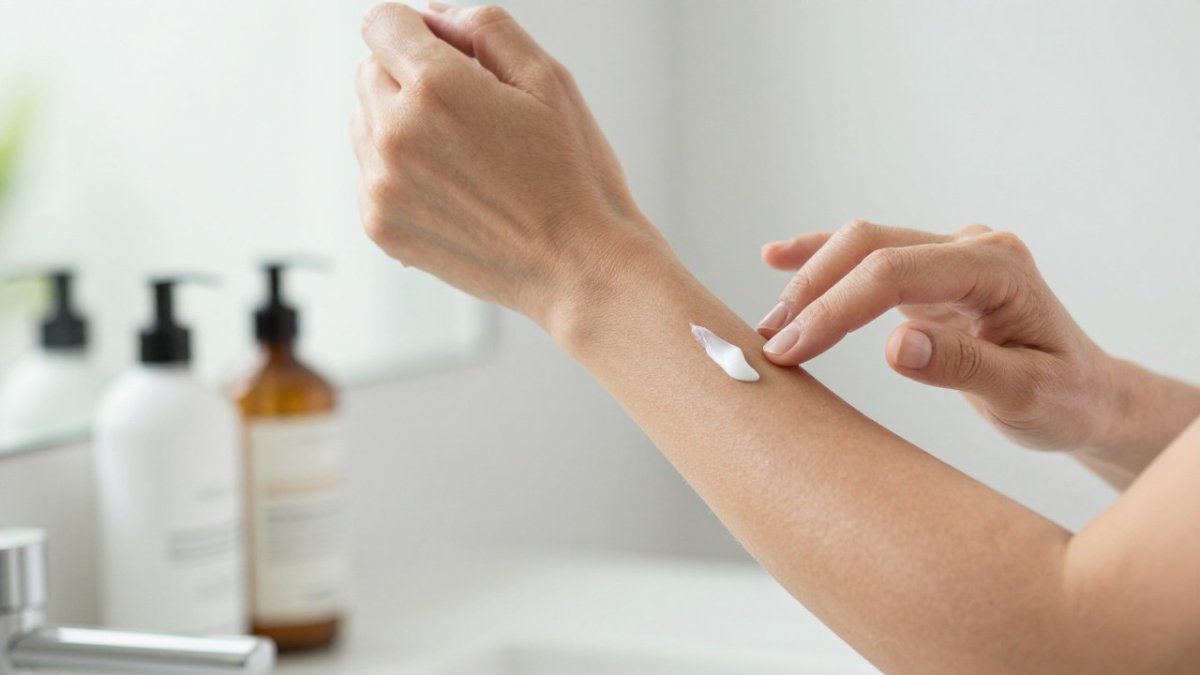
A common mistake is testing on the face first, where skin is thinner and more reactive.
If you plan to introduce actives after testing, our guide to retinol tips for sensitive skin walks through the gradual approach in detail.
Building a Sensitive-Skin Routine with Coule
A sensitive-skin routine works best when it stays short: a gentle cleanser, one moisturizer matched to your skin type, SPF in the morning, and one treatment active at most.
At Coule, we build French pharmacy inspired formulas with modern, science-backed formulation. It comes in a 50 g aluminum tube, and the version with a tube key and dual retinoid pommade helps you get every last bit out.
If you are new to retinoids, start with our beginner's guide to gentle retinol for sensitive aging skin before adding anything else.
Switching away from a product your skin already tolerates is a real risk, and it should be a deliberate choice rather than a trend.
Frequently Asked Questions
What is a good alternative to Bioderma for sensitive skin?
A good alternative matches the job the Bioderma product was doing. For makeup removal and cleansing, look for a fragrance-free micellar water or cleansing oil that lifts impurities without leaving residue. For dryness and tightness, look for a moisturizer for sensitive skin built around barrier support, with ingredients such as niacinamide, allantoin, or oat. Give a new formula several weeks before judging it. Patch test first and change one product at a time.
What is a good alternative to Bioderma Atoderm?
Atoderm sits in the dry-to-very-dry body and face category, so the replacement should be a rich formula, not a lightweight lotion. Look for a moisturizing cream, balm, or shower oil aimed at tightness and barrier support, and check that it is fragrance-free and non-comedogenic if you are acne-prone as well as dry. Be skeptical of exact-dupe claims: What's In My Jar lists no exact dupe for Bioderma Atoderm Moisturiser Normal to Dry Sensitive Skin, with its nearest match at only 45%. Treat close matches as alternatives, not substitutes.
Which Bioderma alternative is best for dry, sensitive skin?
Start with function, then texture. Very dry skin usually does better with a balm or rich cream applied to damp skin, while oily-but-sensitive skin often prefers a lightweight formula that will not clog pores. Ingredient lists help: sensitive-skin formulas commonly include ingredients such as niacinamide, Avena sativa, and allantoin. Compare the full ingredient list rather than the front label, and patch test before switching your whole routine.
How can I patch test a new sensitive-skin product?
Apply a small amount to the inner forearm or behind the ear, twice daily, for two to three days, and leave it otherwise untouched. If there is no redness, itching, or stinging, test it on a small area of the face before using it everywhere. Stop at the first sign of irritation. A product's ingredient list does not guarantee it suits every sensitive-skin user, so your own patch test is the deciding evidence.
